
We work different
By making jobs more accessible, Advocations has helped more than 21,000 people with disabilities return to work
We work different
By making jobs more accessible, Advocations has helped more than 21,000 people with disabilities return to work

Individual Services
We specialize in helping disability beneficiaries return to work

Business Services
We recruit the talent you don't & make disability-inclusion your competitive advantage
Individual Services
We specialize in helping disability beneficiaries return to work
Business Services
We recruit the talent you don't & make disability-inclusion your competitive advantage
All 50 States
We support workers with disabilities & companies nationwide
121 K
People with disabilities engaged and proctively recruited since 2022
93% Retention
Our annual retention shows that job placement is just the beginning
17+ years in business
A trailblazer in disability-focused recruitment since 2009, we have consistently proven the unique role business has in driving disability-inclusive opportunities.
Job Creator of the Year
Received National recognition from the Small Business Administration (SBA) for creating 153+M in economic impact in 2017

No Cost Employment Services
Ticket To Work & Advocations
Are you tired of the limitations that come with relying solely on SSI or SSDI support? Are you ready to take control of your life and career, but feeling overwhelmed by the process?
Advocations' Ticket To Work program is here to help. Our proven system empowers SSI and SSDI recipients like you to navigate the complexities of job seeking, securing employment, and leveraging work incentives to help you achieve your short- and long-term goals.
Do you receive SSI or SSDI benefits?
Want to earn more money?
Not sure what you can do?
Worried about "messing up" your benefits?
100% disability- and woman-owned small business
100% disability- and woman-owned small business
Strategic Business Services
Make disability your competitive advantage
We have the experience you need to realize the business benefits of disability inclusion

Proactive Recruitment
Decrease turnover with our job matching service that targets qualified talent and helps them navigate your hiring process
Training & Consulting
Leverage our expertise in disability and employment to develop disability inclusive workplaces

Contingent Staffing
Low-risk, high impact strategy that provides opportunities to candidates often overlooked in traditional hiring practices

Employee Support Program
A flexible and confidential solution to manage disability-related questions and performance management
Proof that we work different
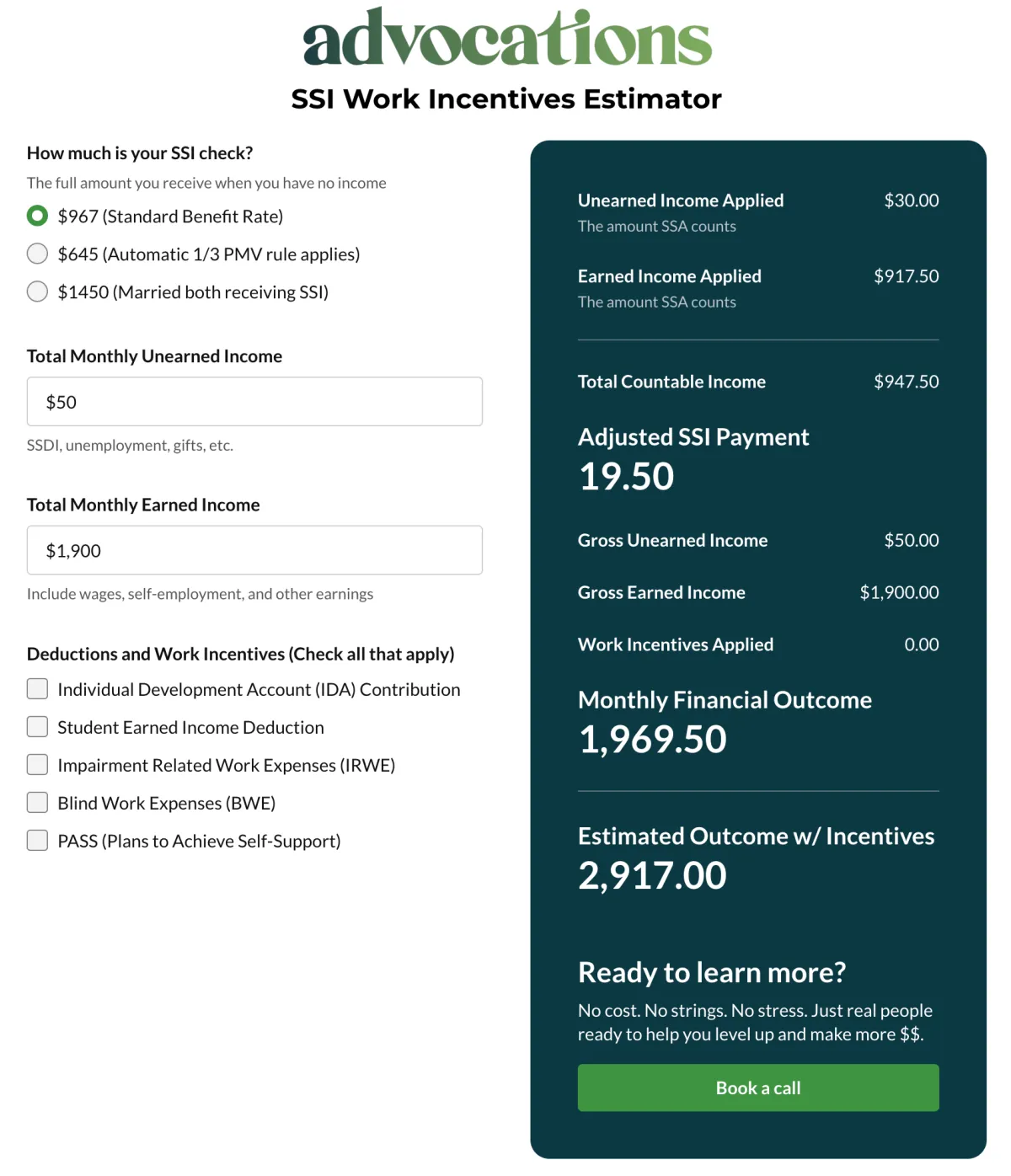
Do you receive SSI?
Check out our
SSI Work Incentives Estimator
Do you receive SSI?
Check out our SSI Work Incentives Estimator
How to complete your work activities report online
Doing the right thing—like reporting your earnings to Social Security—should feel like a win. But sometimes, being honest triggers a landslide of bulky envelopes and scary deadlines.
If you’ve received an SSA-821 (Work Activity Report), take a deep breath. Don’t panic.
The SSA just released a new, streamlined version of this form for 2026. It’s shorter and less clunky than the old one, but the stakes are just as high. As your Career Coaches on The A-Team, we’re here to ensure you don’t just "fill it out," but that you use it to tell your true story.
Go Digital (Seriously, Skip the Paper)
The biggest change for 2026 is the push for digital submission. You can now bypass the post office entirely by uploading the form and your pay stubs directly through your my Social Security account.
Link: Upload Your Documents Here
Pro Tip: Sometimes the site gets stuck loading in Chrome. If that happens, have a backup browser (like Edge or Firefox) ready.
Accessibility: Online is a great option if mobility is challenging or if writing by hand is difficult.
The Breakdown: Your Cheat Sheet
The new form follows a specific logic to decide if your work counts as "Substantial Gainful Activity" (SGA). In 2025, the SGA limit is $1,620/month (or $2,700 if you are blind). Here is the flow you need to follow:
Step 1: The Money Check (Questions 1 & 2)
The "Yes/No" Gate: The form starts by asking if you had any employment income since your disability onset date.
If Yes: You proceed to the work details (Question 3).
If No: You skip to Question 2, where you disclose non-work income like sick pay, holiday pay, or Workers' Compensation. This distinction matters because "sick pay" is not "earned income," meaning it doesn't count against your work limits.
Step 2: The "Tell-All" (Questions 3 & 4)
Question 3: This is your diary entry for your work activity. Be honest about your hours and earnings. Note: The new form removed the old "Pay Stub Table" to save space—you can just check a box if you are attaching or uploading your stubs.
Question 4 (Special Pay): Did you get paid for time you didn't actually work (like vacation or bonuses)? Report it here. These payments are deducted from your "countable income," which can save your benefits.
Step 3: The "Subsidy" Section (Question 5) This is the most critical section for protecting your benefits. It asks if you receive "special conditions" or help at work.
The Update: The 2026 form streamlines this, but you must still look for options indicating "extra supervision," "fewer duties," or "lower productivity" compared to coworkers.
Why it matters: If you check these boxes, the SSA may decide that even if you are paid $20/hour, the real value of your work is less. This is called a Subsidy, and it keeps your countable income lower.
Step 4: Unsuccessful Work Attempts (Question 6) Did you try a job for less than six months but had to stop because of your health?
Put it down. The form specifically looks for these "short stints" where work stopped due to your medical condition or the removal of special conditions.
These Unsuccessful Work Attempts (UWAs) often do not count against you when SSA assesses your disability status.
Step 5: IRWEs (Your Receipts Are Gold) Question 7 asks about Impairment-Related Work Expenses (IRWEs). These are costs you pay out-of-pocket for things you need to work.
Co-pays for meds that keep you functioning?
Uber/Lyft costs because you can't drive?
Specialized equipment?
Keep those receipts. They act like tax deductions for your disability limit.
The Final Touches
The Remarks Section Use this space for anything else the form didn't cover. If there is more to your story—like a pending accommodation request—write it here.
After You Click Submit You will get a proof of submission emailed to you. Download and save a copy. Always keep a paper trail.
We’re In Your Corner
Navigating the "oh-nos" and the unknowns of returning to work is what we do best. You are not just a case number to us.
If you are a Ticket to Work participant and this new form still feels overwhelming, reach out. We are here to cut through the layers of fear and help you navigate the system with confidence.
Ready to take control of your career without the fear of the benefits cliff? Let's chat.

Accredited Leaders in Autism Employment
One of the first programs worldwide to receive a specialized accreditation for autism employment supports and services
Certified Small Business
100% woman- and disability-owned small business based in Charlotte, NC
Nationally Accredited Services
Achieved Highest Level of CARF Accreditation
An organization receiving a Three–Year Accreditation has put itself through a rigorous peer review process and has demonstrated to a team of surveyors during an on-site visit that its programs and services are of the highest quality, measurable, and accountable.


© 2025 Advocations - All Rights Reserved