
We work different
By making jobs more accessible, Advocations has helped more than 21,000 people with disabilities return to work
We work different
By making jobs more accessible, Advocations has helped more than 21,000 people with disabilities return to work

Individual Services
We specialize in helping disability beneficiaries return to work

Business Services
We recruit the talent you don't & make disability-inclusion your competitive advantage
Individual Services
We specialize in helping disability beneficiaries return to work
Business Services
We recruit the talent you don't & make disability-inclusion your competitive advantage
All 50 States
We support workers with disabilities & companies nationwide
121 K
People with disabilities engaged and proctively recruited since 2022
93% Retention
Our annual retention shows that job placement is just the beginning
17+ years in business
A trailblazer in disability-focused recruitment since 2009, we have consistently proven the unique role business has in driving disability-inclusive opportunities.
Job Creator of the Year
Received National recognition from the Small Business Administration (SBA) for creating 153+M in economic impact in 2017

No Cost Employment Services
Ticket To Work & Advocations
Are you tired of the limitations that come with relying solely on SSI or SSDI support? Are you ready to take control of your life and career, but feeling overwhelmed by the process?
Advocations' Ticket To Work program is here to help. Our proven system empowers SSI and SSDI recipients like you to navigate the complexities of job seeking, securing employment, and leveraging work incentives to help you achieve your short- and long-term goals.
Do you receive SSI or SSDI benefits?
Want to earn more money?
Not sure what you can do?
Worried about "messing up" your benefits?
100% disability- and woman-owned small business
100% disability- and woman-owned small business
Strategic Business Services
Make disability your competitive advantage
We have the experience you need to realize the business benefits of disability inclusion

Proactive Recruitment
Decrease turnover with our job matching service that targets qualified talent and helps them navigate your hiring process
Training & Consulting
Leverage our expertise in disability and employment to develop disability inclusive workplaces

Contingent Staffing
Low-risk, high impact strategy that provides opportunities to candidates often overlooked in traditional hiring practices

Employee Support Program
A flexible and confidential solution to manage disability-related questions and performance management
Proof that we work different
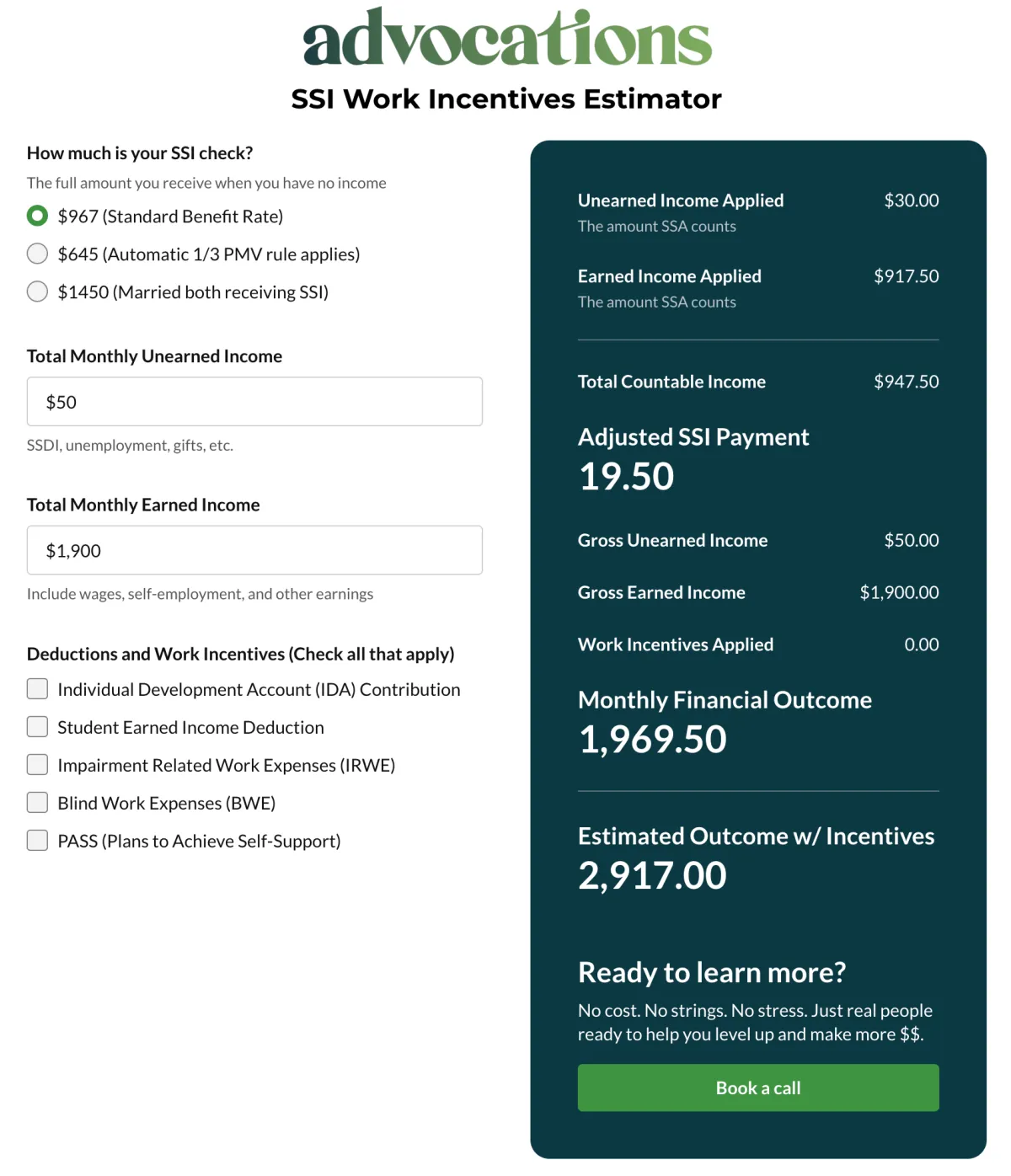
Do you receive SSI?
Check out our
SSI Work Incentives Estimator
Do you receive SSI?
Check out our SSI Work Incentives Estimator
Check out our latest blog post
Accredited Leaders in Autism Employment
One of the first programs worldwide to receive a specialized accreditation for autism employment supports and services
Certified Small Business
100% woman- and disability-owned small business based in Charlotte, NC
Nationally Accredited Services
Achieved Highest Level of CARF Accreditation
An organization receiving a Three–Year Accreditation has put itself through a rigorous peer review process and has demonstrated to a team of surveyors during an on-site visit that its programs and services are of the highest quality, measurable, and accountable.


© 2026 Advocations - All Rights Reserved